
 English
 Español
Submit feedback

Does gate location affect dashboard appearance
The visual quality of automotive interiors is often judged within seconds. Surfaces like dashboards are large, flat, and highly exposed, meaning even subtle defects become immediately noticeable under sunlight or cabin lighting.
One of the most overlooked contributors to these visual issues is the injection entry point inside the mold. The design of a car dashboard mold does not only define shape accuracy, but also determines how molten polymer flows, freezes, and orients across the entire visible surface. Gate placement becomes a silent factor behind gloss variation, flow marks, and even long-wave distortion across the instrument panel.
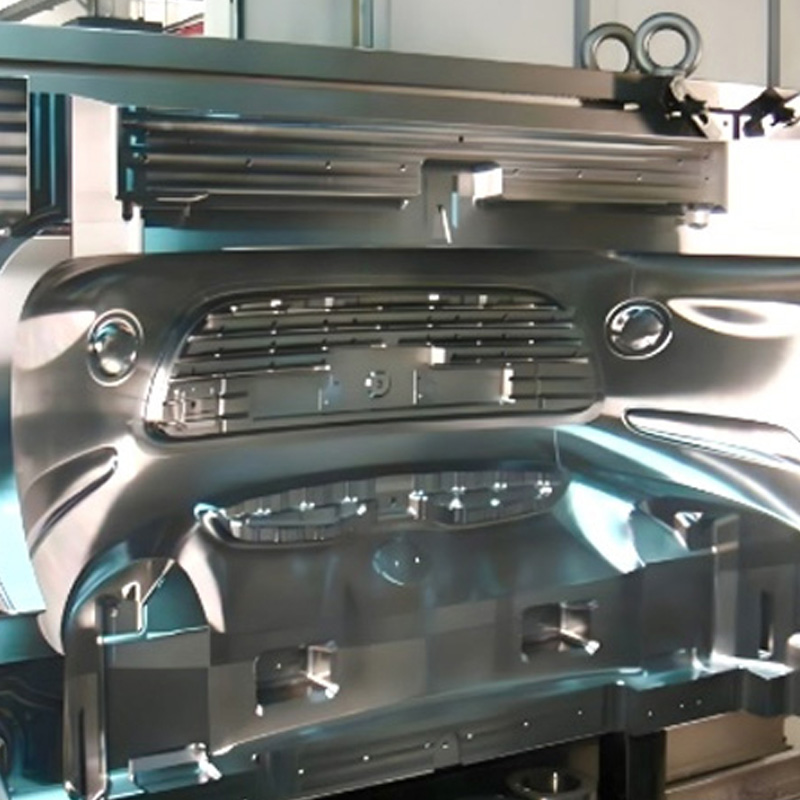
Gate Position Controls More Than Filling Behavior
The gate acts as the pressure entry point where molten resin enters the cavity. Once flow begins, the material spreads outward, forming molecular orientation patterns that remain frozen after cooling.
Industry studies show gate location directly affects:
- Flow balance across large Class A surfaces
- Weld line formation near vents and inserts
- Shrinkage distribution across thick and thin sections
- Surface gloss consistency on visible areas
A poorly positioned gate may still fill the cavity, but the cosmetic outcome can shift dramatically due to uneven pressure decay and cooling gradients across the dashboard surface.
Why Dashboard Surfaces Are Extremely Sensitive
Unlike smaller trim parts, dashboards combine multiple wall thickness zones, long rib structures, airbag openings, and integrated vents. These features create complex flow paths that amplify any imbalance introduced at the gate.
Common appearance issues include:
- Flow marks radiating from the injection point
- Gloss inconsistency between left and right zones
- Weld lines around instrument cluster openings
- Surface waviness after cooling shrinkage
These defects are not always visible immediately after molding. Many appear only after UV exposure or thermal cycling inside the vehicle cabin.
How Gate Location Influences Surface Appearance
Flow Path Length and Surface Stress
Long flow distances from an edge gate or poorly centered entry point can increase pressure drop. As the melt front travels, it cools unevenly, which affects how polymer chains orient and solidify.
This often results in:
- Dull regions far from the gate
- Visible flow hesitation lines
- Uneven surface reflectivity
Simulation studies consistently show that adjusting gate position can significantly change filling symmetry and reduce surface imbalance across large panels.
Gate Location and Weld Line Visibility
Weld lines form where two flow fronts meet. On dashboards, this often occurs around air vents, speaker cutouts, or structural ribs.
A centrally balanced gate system can reduce uncontrolled flow splitting, while a poorly placed edge gate may force molten plastic to separate early, increasing visible weld marks in decorative regions.
Once visible on a Class A surface, weld lines cannot be fully removed through process adjustment alone.
Surface Quality Impact from Gate Type and Entry Design
Different gate styles produce different aesthetic outcomes. Even before adjusting process parameters, gate architecture already defines potential surface behavior.
- Edge gates may leave visible vestige marks on hidden surfaces
- Fan gates distribute flow more evenly across wide dashboard areas
- Hot runner valve gates reduce visible gate marks but require precise alignment
- Submarine gates hide entry points but may influence internal stress patterns
Each configuration shifts how the dashboard surface freezes, which directly influences gloss uniformity and visual continuity.
Material Flow Behavior in Large Dashboard Molds
Large interior panels typically use materials such as PP-TD20, PC/ABS blends, or talc-filled polypropylene. These materials respond differently to gate positioning due to viscosity and shrinkage characteristics.
Typical shrinkage ranges:
- PP-based compounds: 1.0%–2.0%
- PC/ABS blends: 0.5%–0.8%
- Mineral-filled grades: 0.3%–1.0%
Uneven gate placement can amplify shrinkage differences across long dashboard spans, causing slight curvature that becomes visible after installation inside the vehicle cabin.
Cooling Balance and Appearance Stability
Cooling layout interacts directly with gate position. Areas closer to the gate tend to freeze later, while remote sections solidify earlier, creating differential shrinkage.
This imbalance can result in:
- Subtle sink marks near thick rib intersections
- Surface tension variations on decorative skins
- Uneven reflection under sunlight
Balanced cooling channels combined with optimized gate positioning help reduce these effects before they appear in production parts.
Why Engineers Prioritize Hidden Gate Placement
Dashboard components are classified as Class A surfaces, meaning cosmetic visibility takes priority over manufacturing convenience. Gate placement is therefore often shifted to:
- Underside structural ribs
- Airbag housing zones
- Non-visible mounting areas
This strategy reduces visible vestige and helps maintain uniform appearance across the entire instrument panel. However, it requires careful balance to avoid introducing long flow paths or excessive pressure loss.
Final Perspective
Gate location inside a car dashboard mold is not simply a tooling detail. It defines how the material behaves during every stage of molding—from initial injection to final cooling. Appearance issues such as gloss variation, weld lines, and surface waviness often originate from this single design decision rather than post-processing conditions.
A well-positioned gate does not just fill the mold; it guides the entire visual quality of the dashboard. Once the flow path is stabilized at the design stage, downstream adjustments become significantly more predictable, resulting in more consistent interior surfaces across mass production.



The company focuses on the field of special equipment manufacturing, and its core business revolves around the design, manufacturing and related technical services of injection molds.
© Taizhou Lingfei Mould & Plastic Technology Co., Ltd.
OEM Injection Mold Factory
