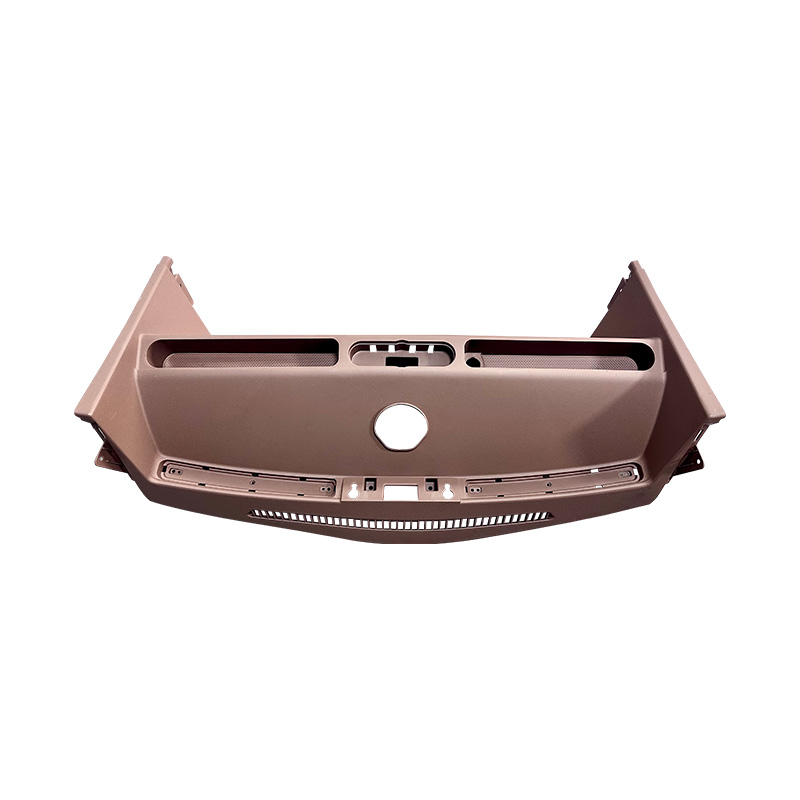
Automotive Mold Supplier Capabilities: What Quality, Standards, and Factory Choice Actually Mean for Production
Automotive Mold Supplier: Quality and Standard Production Capabilities
Not every shop that cuts steel can call itself an automotive mold supplier. The gap between a general toolmaker and a true automotive-grade supplier shows up in two places: quality systems and production consistency.
Quality starts with the steel itself. A proper automotive mold supplier sources tool steel that meets ASTM or DIN standards—think P20, H13, or 420 stainless for corrosion-prone parts. Certifications like IATF 16949 are not just paperwork. They require traceability from the melt batch to the final cavity surface. Without that, a mold might run fine for 10,000 shots. Then it cracks.
Standard production capabilities mean more than having CNC machines. It means documented change control. It means first article inspection reports on every cavity. It means the supplier can run the same mold design six months apart and deliver identical results.
- Hardness testing: Every block verified to the specified Rockwell range (typically 30–50 HRC depending on application)
- Surface finish documentation: Ra values measured, not guessed—mirror finishes for visible interior parts
- Electrode wear management: For EDM work, documented electrode replacement schedules prevent cavity drift
- Sampling protocols: First shots inspected at 1 hour, 8 hours, and 24 hours of continuous run time
An automotive injection mold looks simple from the outside. Two blocks of steel that close, fill with plastic, and open. Inside, complexity multiplies. Modern automotive injection molds run hot, pressurized polymer through channels that must balance flow within fractions of a second.
The gate location decides everything. Put the gate on a visible exterior panel, and you get a witness mark that paint cannot hide. Hide the gate on an unseen surface, and the flow distance changes. An automotive injection mold for a door handle uses a different gate strategy than one for an engine cover. One prioritizes surface finish. The other prioritizes structural integrity under heat.
Cooling channels separate good molds from great ones. Uneven cooling warps parts. An automotive injection mold with conformal cooling (3D-printed channels following the part contour) cycles 20–30% faster than one with straight-drilled lines.
- Hot runner vs. cold runner: Hot runner automotive injection molds reduce waste but cost more upfront. Cold runner suits short production runs.
- Ejection system design: Pin ejectors for flat parts. Sleeve ejectors for cylindrical components like sensor housings.
- Venting depth: Shallow vents (0.02–0.05 mm) let air escape without flashing plastic. Critical for high-gloss surfaces.
Choosing an auto parts mould factory means deciding between specialization and versatility. Some factories only produce two-plate molds for interior trim. Others build complex three-plate molds or stack molds for high-volume parts like cup holders and fuse boxes.
The factory layout tells a story. Walk through an auto parts mould factory that does serious work, and you see separate zones: rough machining, finish machining, bench fitting, and tryout presses. Each zone has climate control. Steel moves from one zone to the next only after inspection. A factory that rough-cuts and finishes on the same machine without moving the part introduces temperature errors.
Lead time separates factories more than price ever could. An auto parts mould factory with in-house heat treatment finishes moulds weeks faster than one that ships steel to an external oven. Similarly, in-house electrode milling for EDM eliminates waiting on third-party shops.
- Tryout press capacity: The factory must have presses sized to the customer's actual production machines. Testing a small mold on an oversized press hides deflection issues.
- Repair track record: Ask about weld repair policies. Quality factories limit weld repairs to non-cosmetic areas only.
- Spare part strategy: Does the factory cut spare inserts at the same time as the original? Smart ones do—matching steel batch and heat treatment.
- Measurement equipment: CMM (coordinate measuring machine) on-site, not outsourced. Optical scanners for complex freeform surfaces.
The auto parts mould factory behaves like a production partner, not a one-time vendor. They ask about your press tonnage, your cycle time targets, and your maintenance schedule. Those questions prove they intend the mold to run for years, not months.

 English
 Español

 +86-18958510469