
 English
 Español
Submit feedback

Are Fender Gaps Decided Long Before Assembly
Panel alignment on a finished vehicle is often judged at the very end of the production line, yet the real origin of those visible gaps between body panels is embedded much earlier. The interaction between tooling geometry, material shrinkage, and structural design determines how consistently a fender will sit against surrounding parts.
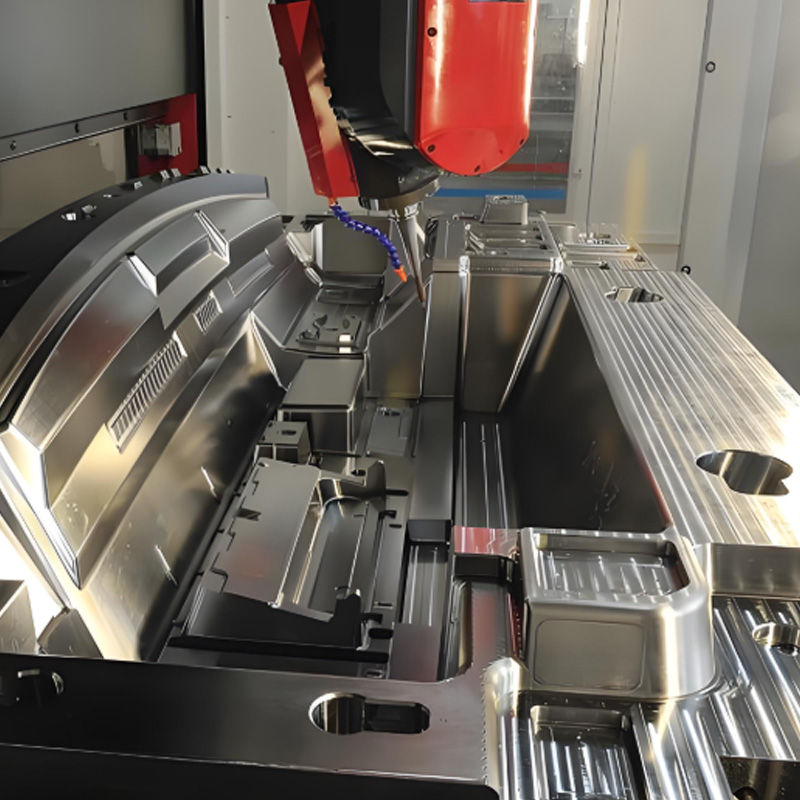
Among exterior components, the car fender mold plays a decisive role in how accurately the fender reproduces its intended shape. Since fenders are large, curved panels exposed to airflow and mechanical vibration, even minor dimensional shifts during molding can translate into noticeable differences in gap uniformity when installed.
Panel Gaps Are a Result of Shrinkage Behavior, Not Just Assembly
Plastic components naturally contract during cooling. This shrinkage is not uniform across the entire geometry, especially in large exterior parts with ribs, mounting bosses, and variable wall thickness.
Engineering analysis of injection molded parts shows that uneven shrinkage is one of the primary reasons for warpage and dimensional distortion, which directly influences final panel fit.
Key shrinkage-driven effects include:
- Edge curvature variation along wheel arch zones
- Local twisting near mounting brackets
- Surface bowing across large flat sections
- Mismatch between left and right fender geometry
These behaviors originate during cooling inside the mold cavity, meaning the foundation of panel gap accuracy is established before trimming or assembly even begins.
Why Fender Geometry Is Highly Sensitive to Mold Conditions
Fenders differ from interior trim because they combine aerodynamic shaping with structural load paths. This makes them more sensitive to cooling imbalance and flow variation.
Research on injection molding defects highlights that uneven cooling across a mold surface creates differential shrinkage, which leads to bending and dimensional instability in large flat or curved parts.
In practical terms, this means:
- A slight temperature difference across the cavity can shift outer contour alignment
- Cooling asymmetry may cause one side of the fender to contract more
- Long flow paths amplify pressure loss and shrink variation
Once the part exits the mold, these internal stress patterns become permanent geometry deviations that influence how the fender meets adjacent panels.
Role of Mold Design in Defining Gap Consistency
Dimensional accuracy is strongly tied to how the cavity is engineered. A car fender mold must manage both aesthetic surface quality and structural stability under shrinkage stress.
Wall Thickness Distribution Controls Deformation
Fender designs often include ribs and reinforcement zones near mounting points. These areas cool at different rates compared to thin outer skins, creating internal stress gradients.
Common outcomes include:
- Outer edge lift near wheel arch lips
- Subtle inward bowing along door interface zones
- Localized sink marks affecting visual continuity
These variations directly affect how evenly the fender aligns with doors, bumpers, and headlights during assembly.
Cooling Channel Layout Influences Shape Retention
Temperature imbalance across the mold surface remains one of the most influential factors in part distortion. Studies show that uneven cooling leads to inconsistent shrinkage and internal stress buildup, which becomes visible as warpage after ejection.
For fender molds, cooling design typically aims to:
- Maintain uniform cavity surface temperature
- Reduce hot spots near thick structural ribs
- Stabilize cycle-to-cycle thermal behavior
Why Small Deviations Become Visible Panel Gaps
Panel gaps between fenders and adjacent components are measured in millimeters, meaning even minor mold-induced deviations become visible after assembly.
Typical contributing factors include:
- Cumulative tolerance stack-up across multiple molded parts
- Non-uniform shrinkage across the fender length
- Variation in clip or bolt boss height
- Residual stress relaxation after demolding
Once installed, these deviations manifest as uneven spacing between the fender and hood, door, or bumper surfaces, even if individual parts appear dimensionally correct in isolation.
Gate Location and Flow Path Influence Final Fit
Although often associated with surface appearance, gate placement also impacts structural symmetry.
A poorly balanced flow path inside the mold cavity can create:
- Uneven packing pressure distribution
- Differential molecular orientation across the panel
- Subtle distortion after cooling relaxation
These effects accumulate across large exterior parts like fenders, where long flow lengths make pressure control more challenging.
Assembly Does Not Create Gaps — It Exposes Them
Vehicle assembly processes can adjust positioning through bolt alignment, clip engagement, and minor force correction, but they cannot fully compensate for geometric imbalance embedded in molded parts.
Field observations of panel gap inconsistency often trace back to molded-in deviations rather than installation error. Even repeated adjustments may fail to fully normalize spacing if the root geometry is inconsistent.
In this context, assembly acts more as a verification stage than a corrective one.
Panel gaps around fenders are not determined at the assembly station alone. They are shaped by thermal behavior, flow balance, shrinkage patterns, and structural design decisions made during mold development.
The car fender mold effectively defines the baseline geometry that every subsequent process must follow. Once cooling, shrinkage, and structural reinforcement are correctly balanced at the tooling stage, final assembly becomes significantly more predictable, and gap consistency across the vehicle improves naturally.



The company focuses on the field of special equipment manufacturing, and its core business revolves around the design, manufacturing and related technical services of injection molds.
© Taizhou Lingfei Mould & Plastic Technology Co., Ltd.
OEM Injection Mold Factory
