
 English
 Español
Submit feedback

Will a Bumper Design Change Require a New Injection Mold
A bumper design revision does not automatically require a completely new mold. At Lingfei, we evaluate the revised geometry, existing tooling structure, plastic material, and production requirements before recommending a modification or replacement. A small adjustment to a mounting hole may need limited machining, while a change to the bumper's overall contour can affect the cavity, core, cooling layout, and ejection system.
Our approach to bumper injection molding projects starts with understanding the exact difference between the approved design and the proposed revision. This comparison helps us estimate engineering work, tooling costs, validation requirements, and possible effects on production. Rather than assuming every revision needs new tooling, we examine whether the existing mold can accommodate the change without compromising part quality or service life.
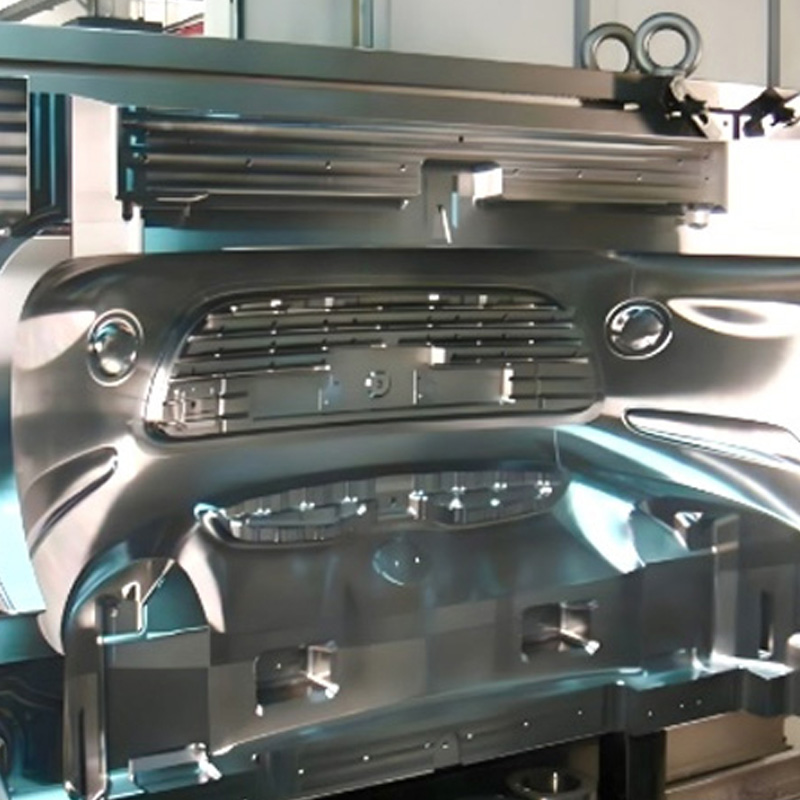
1. Which Bumper Design Changes Can Be Made to an Existing Mold?
The feasibility of a mold modification depends on the location and depth of the change, the amount of available steel, and the mechanisms already built into the tool. Some revisions can be completed locally, while others require extensive reconstruction.
Minor Geometry Adjustments
Small dimensional changes are often manageable, particularly when they do not affect the primary mold structure or the bumper's overall shape.
- Mounting hole adjustments: Moving or enlarging a hole may require localized machining or a revised insert, depending on the existing cavity structure.
- Clip and tab revisions: Adjusting a fastening feature may be practical when sufficient steel and clearance are available around the affected area.
- Rib and boss modifications: Changes to internal reinforcement or mounting bosses require checks for wall thickness, filling, cooling, and local stress.
- Logo and surface details: Updating a molded emblem, shallow groove, or localized texture may be possible without rebuilding the complete mold.
Even a small dimensional revision needs an engineering review. A 2 mm shift in a mounting feature, for example, may interfere with a bracket, sensor, or adjacent vehicle component. We assess the revised position against the assembly drawing rather than judging feasibility by the dimension alone.
Major Shape and Structural Changes
Changes that affect the bumper's main geometry require a more extensive assessment. A revised front fascia contour, a wider grille opening, or a substantially different corner radius may alter the cavity and core surfaces across a large area.
- A change to the bumper's overall width or height may require substantial cavity reconstruction.
- A relocated parting line can affect mold separation, flash control, and the appearance of visible surfaces.
- New undercuts may require additional sliders, lifters, or other side-action mechanisms.
- A revised gate position can change plastic flow, weld-line locations, and filling balance.
- Changes to thick sections or reinforcement ribs may require cooling adjustments to manage shrinkage and warpage.
Our recommendation depends on the combined impact of these changes. A localized alteration may justify an insert replacement, whereas several interconnected structural revisions can make a new mold a more practical engineering solution.
2. How Does the Direction of the Design Change Affect Tooling Work?
The difference between adding material to the molded part and removing material from it is an important consideration during mold modification. The required operation depends on how the revised product geometry translates into the cavity and core surfaces.
Changes That Remove Material From the Molded Part
Suppose the revised bumper needs a larger opening or a deeper recess. The corresponding mold steel may need to be removed through CNC machining, electrical discharge machining (EDM), or another suitable process.
- Confirm that the machining area has sufficient clearance and does not intersect cooling channels.
- Check whether the change affects nearby ribs, shut-off surfaces, or moving mold components.
- Review the resulting surface finish and dimensional accuracy against the revised drawing.
Material removal can be relatively straightforward, but the amount of accessible steel and the location of the feature still determine the actual difficulty.
Changes That Add Material to the Molded Part
A smaller opening, a raised mounting boss, or a thicker molded section may require additional steel in the corresponding cavity or core area. Depending on the existing tool, the work could involve welding, a replacement insert, or reconstruction of a larger mold section.
Welding is not automatically suitable for every location. The mold steel grade, heat treatment, surface finish, dimensional requirements, and proximity to critical features must be reviewed. A replaceable insert may provide a more controlled solution when the affected geometry can be isolated from the main mold structure.
3. When Is a New Bumper Injection Mold More Practical?
Modifying an existing mold can preserve part of the original tooling investment, but repeated or extensive rework may introduce technical and commercial risks. At Lingfei, we compare the modification scope with the cost and capability of building a replacement tool.
| Evaluation Factor | Modification May Be Suitable | A New Mold May Be Preferable |
| Part geometry | Localized changes with limited impact on the main contour | Major changes to overall shape or cavity layout |
| Mold structure | Existing cavity, core, and mechanisms remain usable | Major reconstruction of sliders, parting lines, or core sections |
| Available steel | Sufficient material and clearance remain around the modified area | Insufficient steel or unsuitable space for the revised geometry |
| Tool condition | Existing mold structure remains in serviceable condition | Extensive wear or previous modifications complicate further work |
| Project requirements | Existing tooling can meet the updated specifications | New design requirements cannot be achieved reliably with the current tool |
We also consider the expected remaining production program. A modification that appears economical for a short production run may be less attractive for a long-running automotive platform if the existing mold has limited remaining service life. Conversely, replacing a sound tool for a minor geometry adjustment may create unnecessary expense.
4. How Do Design Revisions Affect Bumper Quality?
Approval of the revised CAD model does not establish that the molded bumper will meet every requirement. The updated geometry must be evaluated against the material, molding process, assembly conditions, and inspection criteria.
Dimensional Accuracy and Assembly Fit
Automotive bumpers contain mounting points, clips, brackets, sensor openings, and interfaces with adjacent body panels. A change in one area can affect alignment elsewhere, particularly across a large molded component.
- Identify critical dimensions and their specified tolerances on the revised drawing.
- Check mounting positions and mating surfaces against the related assembly components.
- Inspect the revised part for warpage and dimensional variation after cooling.
- Confirm that fastening features engage correctly without excessive assembly force.
For example, a drawing may specify a mounting-hole position tolerance of ±0.5 mm. This value should be treated as a project requirement, not a universal bumper tolerance. We use the customer's approved drawings and inspection standards to determine the actual acceptance criteria.
Surface Appearance and Material Behavior
Bumper fascia components commonly use thermoplastics such as polypropylene-based compounds, including impact-modified grades. Material selection depends on the application, impact requirements, temperature exposure, surface finish, and other vehicle specifications.
A geometry change can influence filling pressure, weld-line placement, local shrinkage, and cooling behavior. Adding a rib may increase local thickness and create a visible sink mark on the opposite surface. Moving a gate may change the flow pattern across a visible panel. These effects need to be assessed before the revised tool is released for regular production.
Our engineering review considers the specified resin grade, nominal wall thickness, rib geometry, gate arrangement, and cooling system. The appropriate values vary by design, so we do not apply a single wall-thickness or processing specification to every bumper project.
5. What Should Buyers Provide Before Requesting a Mold Change?
A clear engineering package allows us to evaluate the revision accurately and prepare a quotation that reflects the actual work. Incomplete drawings or unclear revision instructions can create differences between the requested result and the approved tooling scope.
- Current 3D CAD file: Provide the geometry associated with the existing approved mold design.
- Revised 3D CAD file: Identify the proposed geometry and ensure it matches the latest engineering revision.
- Revision comparison: Mark the changed surfaces, dimensions, mounting points, and structural features.
- Material specification: Confirm the resin grade, color, and any relevant mechanical or appearance requirements.
- Inspection requirements: Identify critical dimensions, tolerances, surface standards, and assembly checks.
- Existing tooling information: Supply available mold drawings, insert details, tool condition records, and information about previous modifications.
- Production expectations: Explain the expected program duration, production volume, and any planned model variations.
These details help us distinguish between a local machining operation, a replacement insert, a substantial mold rebuild, and a new-tooling project. They also help establish which validation activities should be included in the quotation.
6. How Should the Modified Mold Be Validated?
After a mold modification, the revised tool needs to demonstrate that it can produce parts meeting the updated requirements. The validation scope depends on the size of the change and its influence on product function and manufacturing conditions.
Recommended Validation Steps
- Tool inspection: Check the modified cavity and core, insert fit, shut-off surfaces, cooling connections, and moving mechanisms.
- Trial molding: Produce samples using the specified resin and documented process conditions.
- Dimensional inspection: Measure the changed features and other critical dimensions identified in the inspection plan.
- Appearance review: Examine surface texture, sink marks, flash, weld lines, and other relevant visual criteria.
- Assembly verification: Check mounting points, clips, brackets, sensor openings, and interfaces affected by the revision.
- Customer approval: Submit the required samples and inspection records for review before releasing the revised part to production.
For changes that affect safety-related functions, impact performance, or regulated vehicle requirements, additional testing and formal customer requalification may be necessary. We establish the scope with the customer rather than assuming that a dimensional inspection alone is sufficient.
7. How Lingfei Evaluates a Bumper Mold Change
At Lingfei, we treat a design revision as an engineering decision rather than an automatic tooling replacement. Our assessment compares the approved model with the proposed revision and examines the existing mold structure, material requirements, production expectations, and quality criteria.
Our review process covers the following points:
- Compare the current and revised CAD models to identify the affected features.
- Assess machining access, available steel, insert design, and the condition of the existing tool.
- Evaluate possible effects on filling, cooling, ejection, surface appearance, and assembly fit.
- Compare the estimated modification scope with the requirements and cost of new tooling.
- Define the proposed work, quotation boundaries, inspection requirements, and sample approval process.
The quotation should distinguish engineering analysis, machining or welding, replacement inserts, mold reassembly, trial molding, dimensional inspection, and any additional validation requested by the customer. This breakdown makes the commercial scope easier to review and reduces uncertainty about charges arising from later revisions.
A bumper design change does not necessarily require a new injection mold. Localized adjustments can often be completed using machining or replaceable inserts, while substantial changes to the bumper contour, parting line, undercuts, or cooling arrangement may justify a new tool. The correct decision depends on existing mold construction, available steel, product requirements, tooling condition, and the remaining production program.
At Lingfei, we recommend comparing the revised CAD data with the existing tooling before committing to either option. Share your current drawings, proposed changes, material specification, and inspection requirements with our team. We can assess the modification scope, identify relevant technical risks, and provide a project-specific recommendation for your automotive mold requirements.



The company focuses on the field of special equipment manufacturing, and its core business revolves around the design, manufacturing and related technical services of injection molds.
© Taizhou Lingfei Mould & Plastic Technology Co., Ltd.
OEM Injection Mold Factory
