
 English
 Español
Submit feedback

Will a Modified Front Bumper Really Match Your Car
A modified front bumper can completely change the visual character of a vehicle. Wider air intakes, sharper corners, lower lips, integrated grilles, and sportier contours are common elements in aftermarket styling. Yet visual appeal is only part of the fitment equation.
A bumper can look close to the original design and still create problems around the fenders, headlights, grille, hood, wheel arches, or parking sensors. This makes the geometry behind a Front Bumper Car Modification Mold particularly important. The mold has to reproduce the intended styling while preserving the dimensional relationships required for installation.
Body Lines Decide Whether the Design Looks Right
Factory body panels are designed as a connected system. The front bumper does not exist independently from the hood, headlights, fenders, grille, and wheel arches. A modified bumper therefore needs reference points that correspond with the original vehicle structure.
- Headlight alignment: The upper bumper edge should follow the lower contour of the headlamp assembly.
- Fender transition: Side edges need to meet the wheel-arch area without creating obvious steps or gaps.
- Grille position: Openings must remain aligned with the grille and surrounding body panels.
- Lower clearance: A deeper modified bumper needs sufficient ground clearance for its intended application.
Dimensional accuracy has become particularly important as automotive bumpers use thin-wall structures. Research on injection-molded automotive bumpers has identified warpage as a factor that can affect assembly accuracy and service performance.
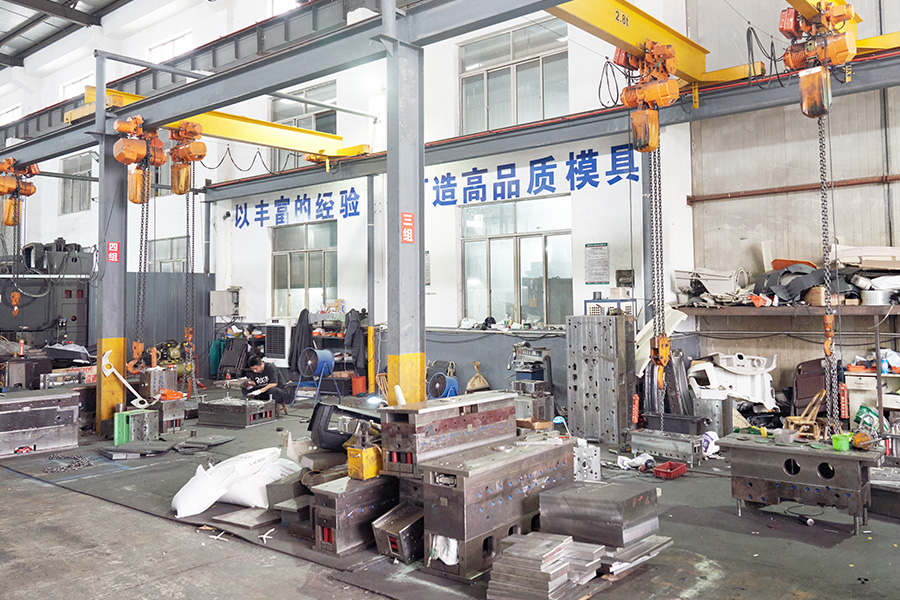
Sensor Holes Are Not Simply Decorative Openings
Modern vehicles can have parking sensors, radar units, cameras, and other driver-assistance components positioned around the front fascia. A modified bumper must account for the exact equipment package rather than assuming that every vehicle in the same model range uses identical sensor locations.
Different vehicle configurations may have different bumper openings and mounting provisions. For example, some versions of the same vehicle can use front parking sensors while another configuration does not. A bumper without the required sensor openings or brackets may therefore fail to match the vehicle hardware even though its exterior dimensions appear correct.
SEMA guidance also highlights that aftermarket bumper and fascia changes can affect radar and parking sensors. Radar performance can be influenced by the material, thickness, curvature, and structure located in front of the sensor.
Curvature Can Change the Finished Look
Styling changes often involve more than adding a larger opening. Designers may reshape the bumper's corners, lower section, or central surface to create a more aggressive appearance.
These curved areas require careful control during Front Bumper Car Modification Mold development. A small dimensional deviation across a large bumper surface can become visible after installation because the part has to connect with several adjacent panels simultaneously.
Typical automotive bumper molds may use PP-based materials such as PP+EPDM+TD20, with reported bumper wall thickness around 3.0 mm. Example tooling specifications also cite assembly clearances around 0.5–1.0 mm, although actual values depend on the vehicle platform, material, geometry, and OEM or aftermarket requirements.
Mounting Points Can Make or Break Fitment
Exterior appearance may receive the attention during product development, but mounting points determine whether the bumper can actually be installed as intended.
- Clips need to align with the vehicle's original attachment locations.
- Bolt holes should maintain the specified center-to-center dimensions.
- Brackets need sufficient clearance from grilles, sensors, lamps, and reinforcement structures.
- Lower mounting areas should account for vibration and road impacts.
- Sensor brackets require controlled positioning rather than simple visual alignment.
Complex modified bumpers may also contain undercuts or recessed mounting structures. Such geometry can require side-core mechanisms, lifters, or other mold actions. A recent custom front bumper mold case used angled lifters and sequential valve-gate technology to handle complex thin-wall geometry and large demolding forces.
Material Choice Affects the Modification
Automotive bumper covers commonly use engineering plastics designed to combine impact performance with processability. PP-based compounds containing elastomer modifiers are widely used for bumper applications because the material system can provide flexibility and impact resistance while remaining suitable for injection molding.
Material behavior also affects shrinkage and dimensional stability. A modified bumper with large flat sections, sharp transitions, or uneven wall thickness can be more susceptible to deformation after molding. Mold flow analysis and cooling design can therefore become important during development.
Paint and Radar Need Their Own Attention
Fitment is not finished once the bare plastic bumper matches the vehicle. Surface coating can also matter around radar-equipped areas. SEMA notes that aftermarket manufacturers should consider material composition, thickness, and curvature around the radar projection area because the bumper forms part of the sensor's operating environment.
This means a modified bumper design should identify sensor zones before finalizing surface treatments, decorative inserts, emblems, or additional layers.
Good Modification Starts With Vehicle Data
A successful modified bumper needs more than an attractive CAD surface. Vehicle year, trim level, sensor package, mounting structure, grille configuration, headlight shape, wheel-arch position, and intended ride height can all influence the final design.
A carefully developed Front Bumper Car Modification Mold translates these requirements into repeatable geometry. The result should not merely resemble the original bumper. It should connect correctly with surrounding panels, provide the required component openings, maintain suitable clearances, and preserve compatibility with relevant vehicle systems.
For aftermarket designers, the real question is therefore not simply whether a modified bumper looks different. It is whether the new shape still behaves like a properly integrated part of the vehicle.



The company focuses on the field of special equipment manufacturing, and its core business revolves around the design, manufacturing and related technical services of injection molds.
© Taizhou Lingfei Mould & Plastic Technology Co., Ltd.
OEM Injection Mold Factory
