
 English
 Español
Submit feedback

Dashboard Mold Function and Material
The Role of the Dashboard Mold in Vehicle Interior Production
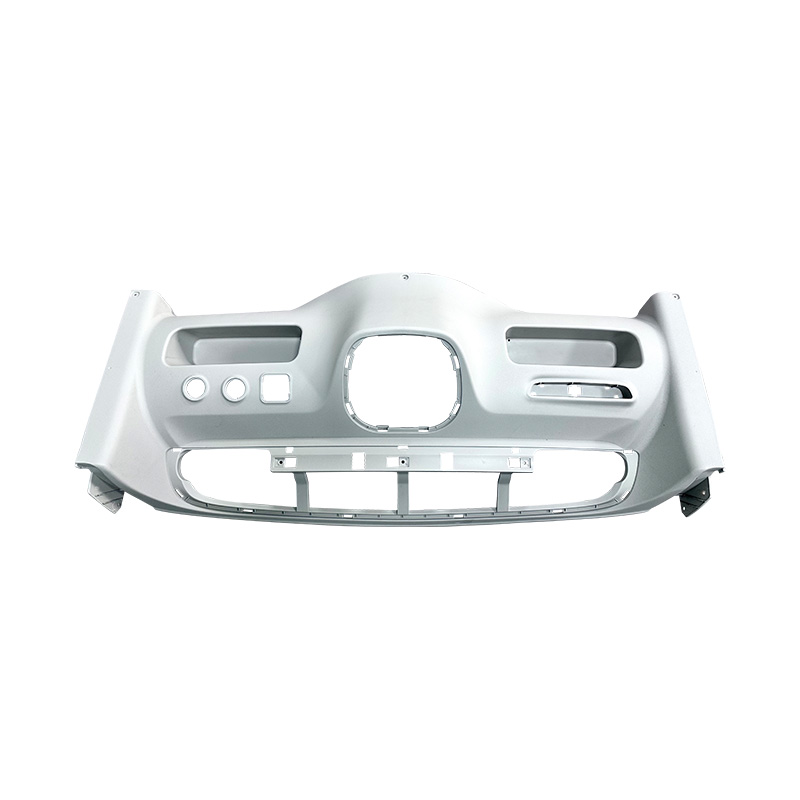
A car dashboard mold is a precision tool used in injection molding to produce the instrument panel (dashboard) of a vehicle. The mold determines the dashboard's final shape, texture, mounting points for vents and gauges, and the location of airbag deployment seams. Dashboard molds are among the largest injection molds in automotive manufacturing, typically measuring 1,500 to 2,200 mm in width, 500 to 800 mm in height, and 600 to 1,000 mm in depth. Mold weight ranges from 8 to 20 tonnes, depending on the complexity and the number of slides (moving cores that create undercuts). The mold is mounted on an injection molding machine with a clamping force of 1,500 to 3,500 tonnes, capable of injecting plastic at pressures of 100 to 180 MPa. Each mold can produce 200,000 to 1,500,000 dashboards over its lifetime, depending on the steel grade and maintenance schedule.
Plastic Materials and Their Processing Requirements
The most common plastic for car dashboards is polypropylene (PP) with 10-20 percent talc filler, often blended with thermoplastic polyolefin (TPO) for improved impact resistance. The talc filler increases stiffness (flexural modulus from 1,200 to 2,500 MPa) but reduces impact strength and increases density (0.95 to 1.05 g/cm³). Some premium vehicles use ABS (acrylonitrile butadiene styrene) or PC/ABS blends (polycarbonate/ABS) for higher heat resistance (heat deflection temperature of 100-115°C versus 85-95°C for talc-filled PP). The melt temperature for PP-based materials is 200-240°C; for PC/ABS, it is 240-280°C. The mold must be heated (via oil or electric cartridges) to 40-70°C for PP and 70-90°C for PC/ABS to ensure proper flow and surface finish. The higher mold temperature for PC/ABS increases cycle time by 20-30 seconds (from 45-60 seconds to 65-90 seconds) because the mold must cool longer before ejection.
Cooling System Design and Cycle Time
Cooling channels are drilled or cast into the mold to remove heat from the molten plastic after injection. For a dashboard mold, cooling typically accounts for 60-70 percent of the total cycle time. A well-designed cooling system brings the mold temperature to within ±5°C across the entire cavity surface. Temperature variations larger than 10°C create uneven shrinkage: areas that cool faster (near cooling lines) shrink less than areas that cool slower (farther from cooling lines), causing warpage of up to 3-5 mm over the dashboard length. Conformal cooling — channels that follow the three-dimensional contour of the dashboard — reduces cycle time by 20-40 percent compared to straight-drilled channels. Conformal channels are produced by 3D printing of the mold core (using maraging steel or tool steel powder) or by casting copper alloy inserts. A dashboard mold with conformal cooling can achieve cycle times of 35-45 seconds for PP, compared to 50-70 seconds with traditional cooling. The cooling fluid is typically water at 15-30°C, circulated at 20-40 litres per minute per circuit. For high-volume production (over 500,000 parts per year), chilled water (5-10°C) is sometimes used, but condensation on the mold surface becomes an issue in humid environments, requiring dehumidified air around the mold.
Selection Criteria for Car Dashboard Molds
The choice of mold steel depends on the expected number of dashboard units. For production runs below 100,000 units (prototype or low-volume models), P20 steel (DIN 1.2738) pre-hardened to 38-42 HRC is adequate. P20 is machinable in its hardened state, meaning no post-machining heat treatment is required, which reduces lead time and cost. A P20 dashboard mold costs approximately 150,000to150,000to300,000, depending on complexity. For production runs of 100,000 to 500,000 units (mid-volume models), H13 or DIN 1.2343 (X40CrMoV5-1) hardened to 48-52 HRC is used. These chromium hot-work steels resist wear from glass-filled or mineral-filled plastics. The cost of an H13 dashboard mold is 300,000to300,000to600,000. For high-volume production exceeding 500,000 units, often for global platforms shared across multiple vehicle models, the mold is made from H11 or DIN 1.2343 with a nitrided or PVD-coated surface (titanium nitride or chromium nitride, 2-5 microns thickness). The coating reduces wear at the gate area and on moving slides. A high-volume mold can cost 800,000to800,000to1.5 million and must be refurbished (re-grinding of shut-off surfaces, replacement of wear plates) every 300,000-500,000 cycles.
The number of mold cavities determines the output per machine cycle. Dashboard molds are almost always single-cavity because the dashboard is a large, asymmetrical part. Two-cavity molds (producing two dashboards simultaneously) would require an injection machine with double the clamping force (3,000-7,000 tonnes) and a much larger platen, which very few factories have. However, some molds incorporate multiple "gates" (injection points) into the same cavity. A dashboard mold typically has 6 to 12 valve gates (hot runner nozzles) arranged along the length of the dashboard. The gates open sequentially: the first gate at the far end opens, then the next gate slightly downstream, and so on. This sequential filling prevents weld lines (visible marks where two melt fronts meet) in visible areas of the dashboard. Each gate requires its own hydraulic or pneumatic actuator and temperature controller, adding 5,000–5,000–10,000 per gate to the mold cost.



The company focuses on the field of special equipment manufacturing, and its core business revolves around the design, manufacturing and related technical services of injection molds.
© Taizhou Lingfei Mould & Plastic Technology Co., Ltd.
OEM Injection Mold Factory
