
 English
 Español
Submit feedback

How Car Center Console Panel Factory Support Centralized Console Systems?
Centralized Interior Control Direction
Vehicle interiors are moving toward ca onsolidated control architecture where multiple switch points are grouped into structured modules. This approach reduces scattered interface placement across dashboards and supports clearer functional zoning.
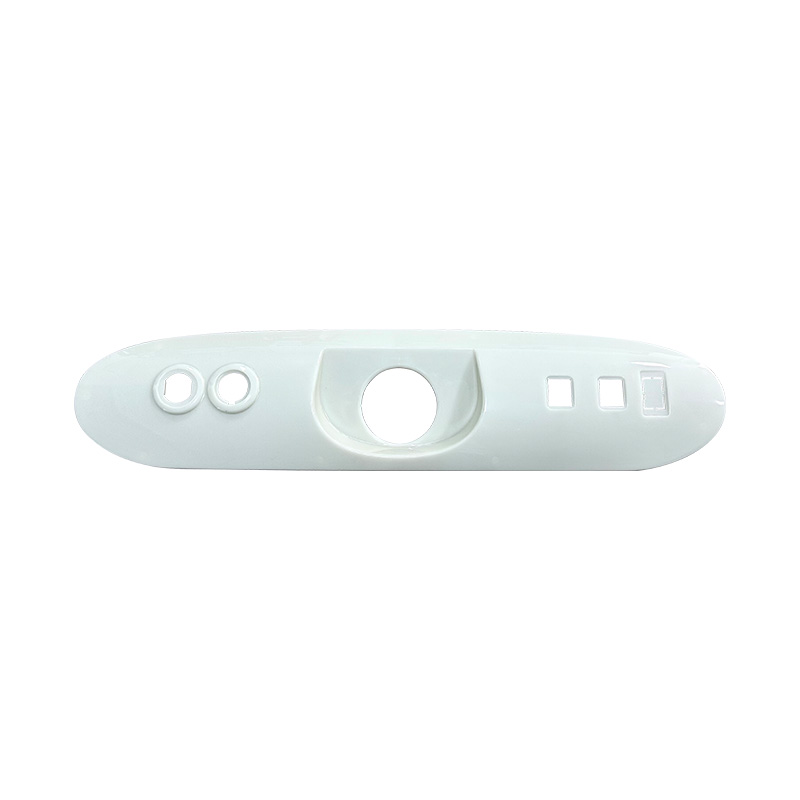
The Car Center Console Panel plays a central role in this structure by combining lighting switches, power control keys, and auxiliary function buttons into a unified panel system. This type of integration simplifies interior layout coordination and reduces fragmented installation points.
Functional Structure and Layout Logic
The internal structure of a Car Center Console Panel is designed around a multi-switch arrangement logic. Dual switch positions and multi-port layouts are commonly applied, allowing several vehicle functions to be controlled from one centralized area.
This layout reduces unnecessary duplication of components inside the dashboard. It also supports alignment between electronic wiring and physical interface positioning, which improves assembly consistency during vehicle interior construction stages.
Manufacturing Approach and Production Flow
A structured production system is required to handle automotive interior components with consistent geometry and repeatable output characteristics.
A Car Center Console Panel Factory typically applies injection molding processes to form integrated function panels. Mold design defines switch cavities, reinforcement ribs, and mounting interfaces within a single production cycle, reducing secondary processing steps.
In this system, tooling precision and cycle stability play important roles in maintaining uniform output across multiple production batches.
Material Behavior and Mechanical Performance
PP engineering plastic is widely used in the production of center console components due to its balanced mechanical behavior. It provides impact resistance suitable for daily interior interaction and maintains dimensional stability under temperature conditions ranging from -30°C to 70°C.
This material also supports long-term structural consistency, reducing deformation risks in extended usage cycles. Surface finish quality is compatible with automotive interior appearance requirements, supporting consistent tactile interaction.
Multi-Function Integration Strategy
The Car Center Console Panel supports functional integration by grouping different control systems into one module. Lighting control, power switches, and auxiliary buttons can be positioned within a single structured panel.
This integration reduces the number of separate interior parts required for dashboard assembly. It also simplifies wiring distribution by centralizing electrical connection points within a defined control zone.
Injection Molding Structure and Tooling Design
Injection molding is the core process used in manufacturing integrated interior control panels. Mold design defines structural shape, switch openings, and reinforcement areas in a single forming process.
A Car Center Console Panel Factory applies injection molding for automobile interior central control function panel systems, where multiple switch interfaces are embedded into one molded structure. This method reduces assembly complexity during interior installation stages and supports structured dashboard layouts.
Production Flow and System Coordination
Production efficiency in automotive interior components depends on repeatable molding cycles and stable material flow behavior. Consistent injection parameters allow uniform surface formation and structural reliability across batches.
Within this system, the Car Center Console Panel is produced under controlled molding conditions to maintain consistent geometry for dashboard integration requirements.
A Car Center Console Panel Factory coordinates multiple molding lines to support continuous production demand, especially for vehicle platforms requiring standardized interior modules across different configurations.
Application Scenarios in Vehicle Interiors
The Car Center Console Panel is commonly used in economy sedans and light electric mobility vehicles. These applications benefit from centralized control structures that reduce scattered dashboard components.
By consolidating multiple functions into a single panel system, interior design becomes more organized, allowing clearer separation between driver interface zones and secondary control areas.



The company focuses on the field of special equipment manufacturing, and its core business revolves around the design, manufacturing and related technical services of injection molds.
© Taizhou Lingfei Mould & Plastic Technology Co., Ltd.
OEM Injection Mold Factory
