
 English
 Español
Submit feedback

Why Does Your Car Need a Car Underbody Protection Plate?
Road debris, uneven surfaces, and water exposure constantly affect the underside of vehicles. Components such as the oil pan, transmission housing, and chassis cross members remain vulnerable during daily operation. A Car Underbody Protection Plate acts as a structural barrier between critical systems and unpredictable road conditions.
For automotive brands and parts distributors, the challenge is balancing durability, weight, and cost. A poorly designed plate may deform under impact, generate vibration noise, or complicate installation. On the other hand, an overengineered structure increases production expense without proportional value.
The practical goal is controlled protection: absorbing impact energy, resisting corrosion, and maintaining dimensional stability over time.
Common Pain Points in Underbody Protection Projects
1. Inconsistent Material Quality
Material thickness variation or unstable alloy composition directly affects strength and forming performance. For metal plates, tensile properties must match the design load requirements. For composite or plastic versions, impact resistance and aging performance are key.
2. Fitment Accuracy
Tolerance control is critical. Misalignment during installation causes stress concentration or unwanted vibration. Dimensional accuracy depends heavily on mold precision and forming processes.
3. Corrosion and Environmental Exposure
Water, mud, and salt exposure accelerate degradation. Surface treatment—such as powder coating or anodizing—must match regional climate conditions.
4. Production Scalability
Automotive programs require stable batch production. Tooling life, cycle time, and repeatability influence delivery schedules and cost planning.
Material Selection for a Car Underbody Protection Plate
Material choice depends on vehicle category and application scenario.
Steel Plates
Steel provides high rigidity and impact resistance. Through stamping dies, sheet metal can be formed into complex reinforcement structures. Stamping allows multiple operations—blanking, drawing, and bending—to be completed within one press cycle, supporting efficient large-scale output.
Aluminum Alloys
Aluminum reduces weight while maintaining reasonable structural strength. Die-casting molds are often used for aluminum components with integrated rib structures. High-pressure forming allows intricate geometries and stable dimensional control.
Engineering Plastics
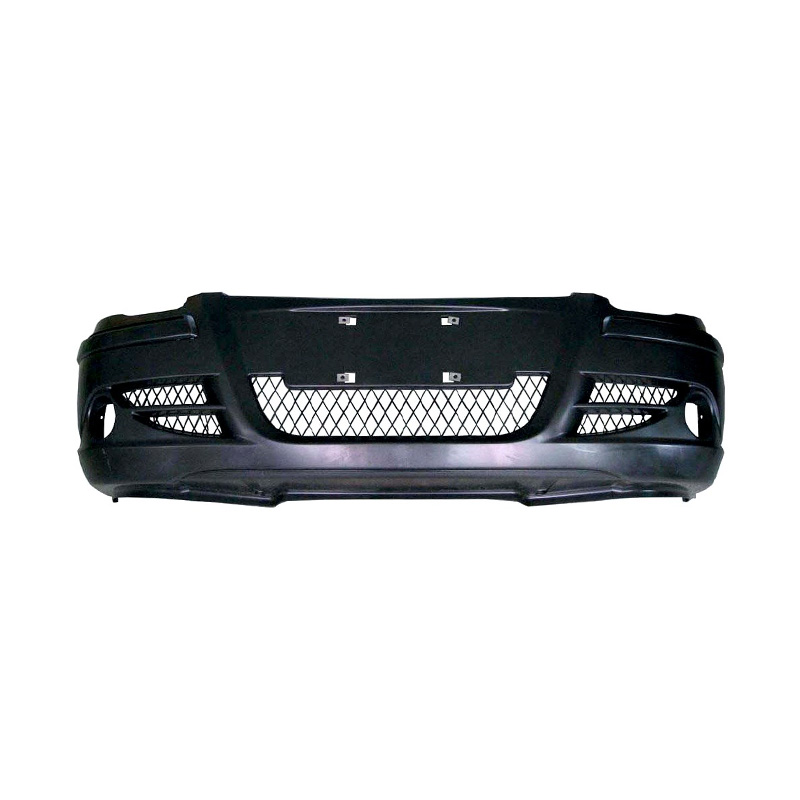
Certain vehicle models use reinforced plastic underbody shields. Injection molds shape melted plastic into detailed forms with a consistent surface finish. This method supports integrated mounting points and aerodynamic contours.
Each material solution requires coordinated mold design and production planning.
How Production Technology Impacts Product Stability
A dependable Car Underbody Protection Plate Manufacturer relies on four core mold categories within automotive manufacturing:
Stamping Dies for Metal Forming
Stamping dies are widely applied in producing structural plates. Sheet metal is shaped through progressive forming processes. This method supports high repeatability and cost control in volume production.
Injection Molds for Plastic Shields
For lightweight vehicle platforms, injection molding offers flexibility in structural design. Melted polymer is injected under pressure into precisely machined cavities, producing complex shapes with stable surface quality.
Die-Casting Molds for Alloy Components
When aluminum structures are required, die-casting molds inject molten alloy under pressure into steel cavities. The result is dense, integrated forms suitable for structural support.
Forging Dies for High-Strength Parts
Although less common for flat shields, forging dies produce heavy-duty components where load resistance is critical. High-temperature deformation refines internal grain structure, enhancing mechanical properties.
A Car Underbody Protection Plate plays a structural role beneath every vehicle platform. Careful material selection, precision tooling, and stable manufacturing processes define its long-term performance in real-world driving conditions.



The company focuses on the field of special equipment manufacturing, and its core business revolves around the design, manufacturing and related technical services of injection molds.
© Taizhou Lingfei Mould & Plastic Technology Co., Ltd.
OEM Injection Mold Factory
