
 English
 Español
Submit feedback

How to Select a Reliable Car Center Console Panel Manufacturer?
Interior design has become a defining element in vehicle development. The center console is no longer just a housing for switches; it organizes control logic, visual harmony, and user interaction into a compact structure. The Car Center Console Panel acts as the interface between electronic systems and daily operation, while also shaping the cabin's visual identity.
For automotive programs, the key concerns usually revolve around durability, structural stability, consistent surface finish, and production scalability. A practical solution combines engineering plastic performance with mold precision and surface treatment flexibility.
Material Selection: High-Toughness PP Engineering Plastic
Material performance defines long-term reliability. Many interior function panels utilize high-toughness polypropylene engineering plastic. This material balances impact resistance and structural rigidity while remaining suitable for large-scale injection molding.
A Car Center Console Panel produced from reinforced PP material maintains stability in temperatures ranging from -30°C to 70°C. Vehicles operating in cold or hot climates require this level of environmental tolerance. Dimensional stability prevents deformation, cracking, or surface warping during long-term usage.
Impact resistance also plays a role in daily durability. Repeated button operation and incidental contact should not cause surface stress whitening or structural fatigue.
Addressing Common Pain Points in Console Panel Projects
Dimensional Inconsistency
Tolerance deviations create assembly gaps or uneven button alignment. Mold precision and stable processing parameters reduce variation across production runs.
Surface Finish Variation
Interior components are visually exposed. Uneven gloss levels, color mismatch, or texture irregularity affect cabin perception. Controlled painting and texturing processes provide a consistent appearance.
Structural Weakness Around Switch Openings
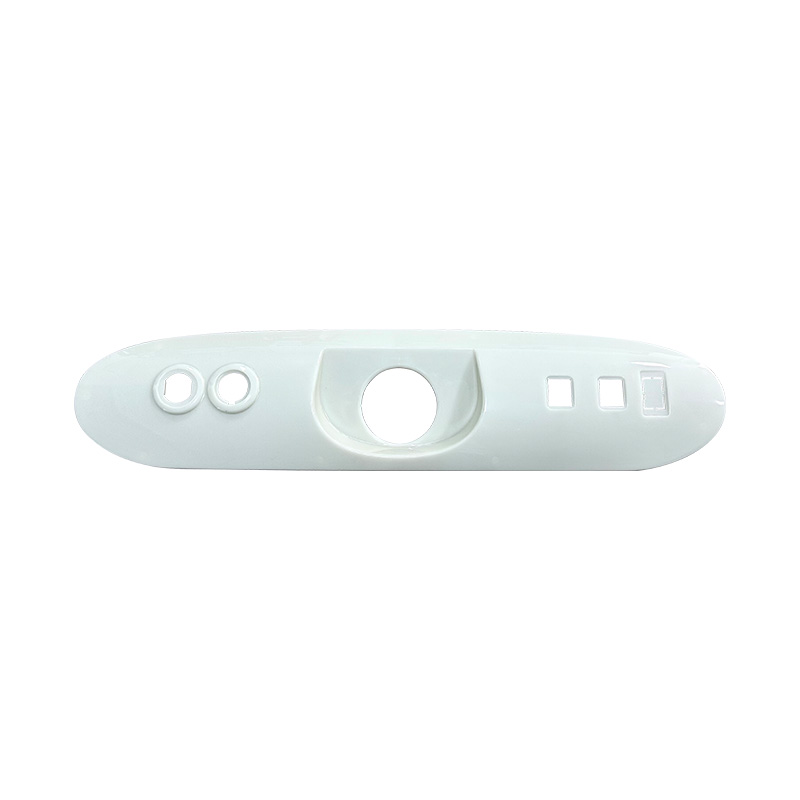
High-frequency use areas require reinforced rib structures. Engineering simulation during design helps distribute stress across the panel body rather than concentrating it at corners.
Temperature Deformation
Without suitable material properties, panels may warp in high heat conditions. High-toughness PP resists distortion across a wide temperature range.
A professional Car Center Console Panel Manufacturer addresses these challenges through coordinated material selection and tooling refinement.
Production Management and Quality Verification
Stable production requires process discipline. Typical quality control measures include:
- Incoming raw material verification
- Mold temperature and pressure monitoring
- Dimensional inspection using coordinate measuring systems
- Surface adhesion and impact resistance testing
Mold maintenance schedules protect cavity integrity across extended production cycles. Because the console panel contains multiple openings and thin-wall sections, regular inspection prevents flash or deformation issues.
Adaptation to Evolving Interior Designs
Vehicle interiors continue to shift toward digital interfaces and compact layouts. Although screen-based controls are expanding, physical switch panels remain relevant for lighting, power, and auxiliary functions.
The Car Center Console Panel must adapt to evolving control architectures. Modular design enables integration with updated electronic systems without completely redesigning the structural base.
Tooling upgrades and cavity modifications allow manufacturers to respond to design changes efficiently. A capable Car Center Console Panel Manufacturer combines mold engineering experience with flexible production lines to accommodate these transitions.
Interior components are handled daily. Structural stability, consistent texture, and reliable mounting performance contribute to overall cabin durability. Injection molding technology, combined with suitable engineering plastic, creates panels that remain dimensionally stable through temperature shifts and repeated operation.
For automotive programs, collaboration with a technically capable Car Center Console Panel Manufacturer aligns product development with cost planning, mold lifecycle management, and volume scalability. Structured production control, integrated design thinking, and material discipline shape a stable supply framework for interior function panels across vehicle platforms.



The company focuses on the field of special equipment manufacturing, and its core business revolves around the design, manufacturing and related technical services of injection molds.
© Taizhou Lingfei Mould & Plastic Technology Co., Ltd.
OEM Injection Mold Factory
